Last updated November 2026
Parents across the United States ask Stella these questions most. Stella is a free AI helper for families raising children with special needs. More than 65,000 parents have used it.
From February through August 2026, families asked Stella 686 questions. Finding therapy and services came up most often, about 19 percent of those questions. Rights and legal help, daily living, school and IEPs, and health care were close behind. In more recent weeks, families also asked about providers who take their insurance, planning for adulthood, communication supports, respite care, and funding such as Medicaid waivers and ABLE accounts.
We update this page each month from the questions families ask. The answers below are a starting point for your own next step. Your child's situation is unique, so you can also ask Stella about your situation.
Stella is an AI tool. A conversation with Stella can help you get organized and find next steps. It does not replace a doctor, a lawyer, a teacher, or another person who knows your child. Human connection still matters.
Questions on this page
1. How do I find therapy or services that take my insurance?
2. How do I apply for a Medicaid waiver for my child?
3. How do I prepare for my child's IEP meeting?
4. How do I find a doctor or specialist who understands my child?
5. How do I get help at home, including respite care?
6. Do I need guardianship when my child turns 18?
7. How do I plan for life after high school, including a job or a place to live?
8. How can I help my child communicate, including with AAC?
9. What is a special needs trust, and does my child need an ABLE account?
10. How do I make an All About Me page for my child?
Start with what you already have. Call the number on your insurance card and ask for in-network providers for the service you need, such as speech therapy, occupational therapy, physical therapy, or ABA. Ask what your plan covers, whether a referral or prior authorization is required, and how many visits are allowed. Then call those offices to confirm they still take your plan.
If your child is under 3, ask your state's early intervention program. Under the Individuals with Disabilities Education Act, infants and toddlers with a delay or disability may qualify for those services. For school-age children, related services can also be written into an IEP when the team agrees they are needed for your child to learn.
Medicaid or a home and community-based services waiver may cover therapy that insurance does not. You can ask Stella to help you look for providers near you who take your plan. A short All About Me page can help a new therapist meet your child as a person, not only as a diagnosis.
A Medicaid home and community-based services waiver, often called an HCBS waiver, can help a child or adult get support at home and in the community instead of in an institution. Services may include respite, personal care, help at home, and other supports. Names and rules differ by state. Official information is on the Medicaid HCBS waiver page.
Start with your state Medicaid agency. Ask which waivers serve people with your child's needs, what the application looks like, and whether there is a waiting list. If there is a list, ask how to get on it and what documents you need. Getting on the list early can matter, because states set how many people a waiver will serve.
Some states also offer a pathway, sometimes called the Katie Beckett or TEFRA option, that can help a child with a significant disability qualify for Medicaid based on the child's own situation, even when a family's income would otherwise be too high. This option is not in every state. Stella can help you sort the first questions to ask. A caseworker at your state agency handles the official application. This is not legal or benefits advice.
You are a member of your child's IEP team. The school should give you notice early enough that you can attend, and you can invite someone who knows your child, such as a therapist or a trusted advocate. Under the Individuals with Disabilities Education Act, an eligible child is entitled to a free appropriate public education, and the IEP is the written plan for that support. Parent resources are on the IDEA Parents and Families page.
Before the meeting, gather recent evaluations, work samples, teacher or therapist notes, and your own list of strengths and concerns. Write down what you want to discuss, and bring copies. Stella's IEP Binder Builder on the Resources page can help you organize those papers. A short All About Me page can help new team members start with your child's strengths and how they communicate.
An IEP should be reviewed at least once a year and built around your child's unique needs. If you disagree with a proposal, you can ask questions, request more time, or use the procedural safeguards the school must give you, including mediation or a formal complaint. Ask Stella to help you make a meeting checklist.
Start with your child's primary doctor and your insurance directory. Ask for names of clinicians who have experience with your child's disability, or with children who have similar communication or sensory needs. If a dentist, neurologist, or other specialist is hard to find, ask the primary doctor for a referral, and ask the specialty office whether they have experience supporting patients like yours.
Call ahead about insurance, wait times, and what helps a visit go well, such as a quieter room, a longer appointment, or a simple written plan for the visit. You can share an All About Me page so the office knows how to greet your child and what may be stressful.
If a service or piece of equipment needs extra approval, a clinician may write a letter of medical necessity. Ask what the letter should include, and keep a copy with your records. Stella can help you think through what to ask a new office and what papers to bring. This is not medical advice. Your child's own clinicians should guide treatment decisions.
Respite is short-term care that gives you a break while your child is with a trusted person. Help at home can also include after-school programs, personal care, or a trained caregiver for a few hours so you can work, rest, or care for other family members.
Ask your state Medicaid agency or disability services office whether respite or in-home support is available through a waiver or another program. Some families also find help through disability organizations, family support programs, or a local faith or community group. Ask about training, backup plans, and how the provider handles communication and safety needs.
Write down what a helper needs to know before the first visit: how your child communicates, what helps them feel safe, any medical note that matters in the moment, and how to reach you. An All About Me page is a simple way to put that on one sheet, and you can make one for free on the Resources page. Stella can help you find the right questions to ask a program near you.
In most cases, turning 18 means your child is a legal adult under state law. You do not automatically stay in charge of medical, school, or financial decisions. Guardianship is one way to keep decision-making authority. It is not the only way, and it is not required for every young adult.
Less restrictive options may include supported decision-making, a power of attorney, a health care proxy, or signed releases so you can still talk with doctors and schools. The right fit depends on your child's ability to make and communicate decisions, and on the rules in your state. Under IDEA, the IEP must include a statement, beginning at least one year before the age of majority, that the student has been informed of rights that may transfer to them.
If your child receives Supplemental Security Income, the Social Security Administration will review eligibility under adult disability rules, usually within a year after the 18th birthday. SSA explains this in What You Need To Know About Your SSI When You Turn 18. Gather medical and school records, and ask SSA what they need. This is not legal advice. Talk with a lawyer who knows disability law in your state.
Planning for adulthood can include work, more education, day programs, housing, and daily living skills. Under IDEA, the IEP must include transition planning no later than the first IEP that will be in effect when your child turns 16, or earlier if the team agrees. That plan should include measurable postsecondary goals related to training, education, employment, and, where appropriate, independent living, plus the services needed to reach them. Invite your child to those meetings whenever you can.
Your state's vocational rehabilitation agency can help with career counseling, job training, and job supports. If your child receives SSI or Social Security disability benefits, ask about Ticket to Work and other work incentives so earnings do not come as a surprise.
Housing options vary widely. Some young adults live with family, some use supported living, and some look at other community options. Ask your state disability agency what is available and whether a waiver can help with support at home. Stella can help you build a simple transition checklist for your child's goals. Mentors, job coaches, and family still matter a great deal in this season.
Communication can mean spoken words, signs, gestures, pictures, or a device or app, often called augmentative and alternative communication, or AAC. Many children use more than one method. The goal is a reliable way for your child to share what they want, need, and feel, not a single 'right' tool.
Ask a speech-language pathologist for an AAC evaluation. If your child has an IEP, communication supports and devices can be part of that plan when the team agrees they are needed. Insurance or Medicaid may cover a device with the right documentation. Ask what is covered before you buy something on your own.
Practice the same tools at home, at school, and in the community, so your child has a consistent way to be heard. Put a short note about how your child communicates on an All About Me page so new people do not assume silence means your child is not listening. Stella can help you think through questions to ask a speech therapist or the IEP team. This is not medical advice.
A special needs trust, sometimes called a supplemental needs trust, can hold money for a person with a disability. When it is set up and used correctly, it may help a person keep needs-based benefits such as SSI or Medicaid. The rules are detailed, and the right type of trust depends on whose money is going into it. Stella's Parent's Guide to Special Needs Trusts walks through the basics.
An ABLE account is a different tool: a tax-advantaged savings account for qualified disability expenses. As of 2026, a person may be eligible if their blindness or disability began before age 46. For 2026, total annual contributions are generally limited to $20,000. The Social Security Administration generally does not count the first $100,000 in an ABLE account as a resource for SSI. See the IRS ABLE page and the SSA ABLE spotlight.
Many families use an ABLE account for shorter-term savings and consider a trust for a larger gift or inheritance. You may not need both. This is not legal or financial advice. Talk with a lawyer or planner who understands benefits, and ask Stella to help you list questions for that appointment.
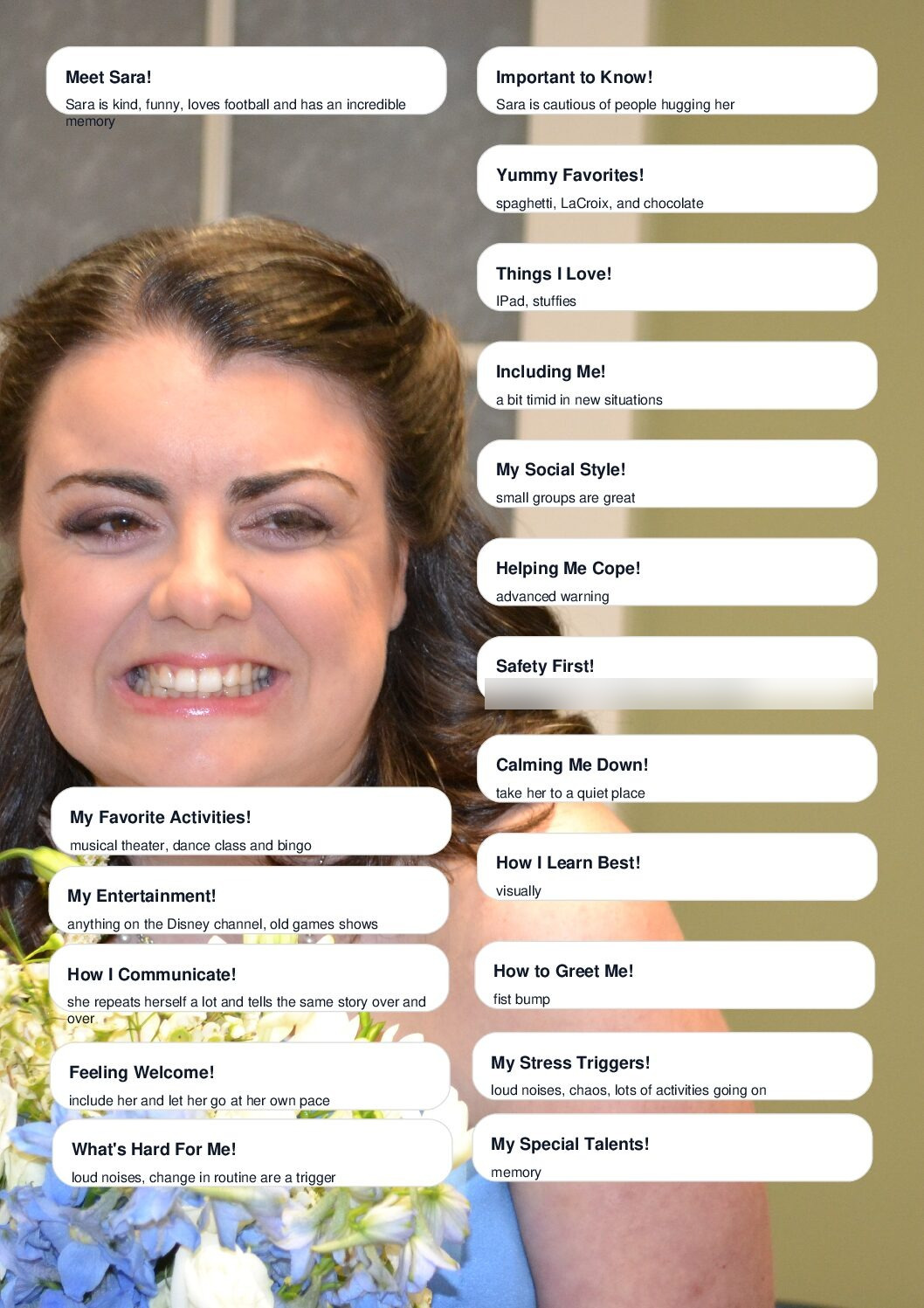
An All About Me page is a one-page introduction to your child that a teacher, caregiver, coach, or first responder can read in a minute. It usually starts with strengths, then adds how your child communicates, what feels hard, and what helps them feel safe. It is not a full medical file or a long IEP.
You can make one for free, with no account, using Stella's All About Me Creator on the Resources page. Walk through the short questions, skip anything you want to keep private, add a clear photo if you wish, and download the PDF. Our guide, How to Make an All About Me Page for Your Child, walks through what to include and how to keep private details off the page.
Keep copies where they will be used, such as a school folder, a caregiver's notebook, and your phone. Update the page as your child grows. Leave off your street address, especially on a copy that may be posted or passed around.
Ask Stella about your situation
A last word
These are the questions we hear most often, and your question still counts if it is not on this list. Stella is free. You can ask in English or Spanish, any hour.
Stella is an AI helper. It can point you toward next steps and help you prepare for conversations with people who support your child. It does not replace a doctor, lawyer, teacher, or caseworker. Human connection still matters.
This page is for general information. It is not medical, legal, or financial advice.
Last updated November 2026

Empowering Special Needs Families with Support and Solutions
Like staying up to date?
LATEST BLOG POSTS
NAVIGATION MENU
© Copyright The Gear Foundation. All Rights Reserved. Design by KD Creative Studio